


 Deutsch
 Español
 Français
 русский
Content
The Size Gap Problem: Queen Mattress on a King Frame
A queen mattress measures 60 inches wide and 80 inches long. A king bed frame is 76 inches wide — 16 inches broader. That difference is not subtle. Placed on a king frame, a queen mattress leaves 8 inches of exposed frame on each side, creating an awkward visual gap and a potential safety hazard.
Beyond aesthetics, the structural concern is real. A queen mattress sitting on a wider king frame loses the lateral edge support it was engineered to rely on. Over time, unsupported edges can compress unevenly, accelerating sagging and reducing the mattress's usable lifespan. There is also a practical safety risk: the gap between the mattress edge and the frame rail is wide enough for a sleeping person to roll into.
That said, this combination is not always avoidable. Inheritance, budget constraints, phased upgrades, or a deliberate plan to replace only the mattress or frame later are all valid reasons someone ends up with mismatched sizes. Understanding the tradeoffs helps you manage them intelligently.
Why a Divan Headboard Changes the Equation
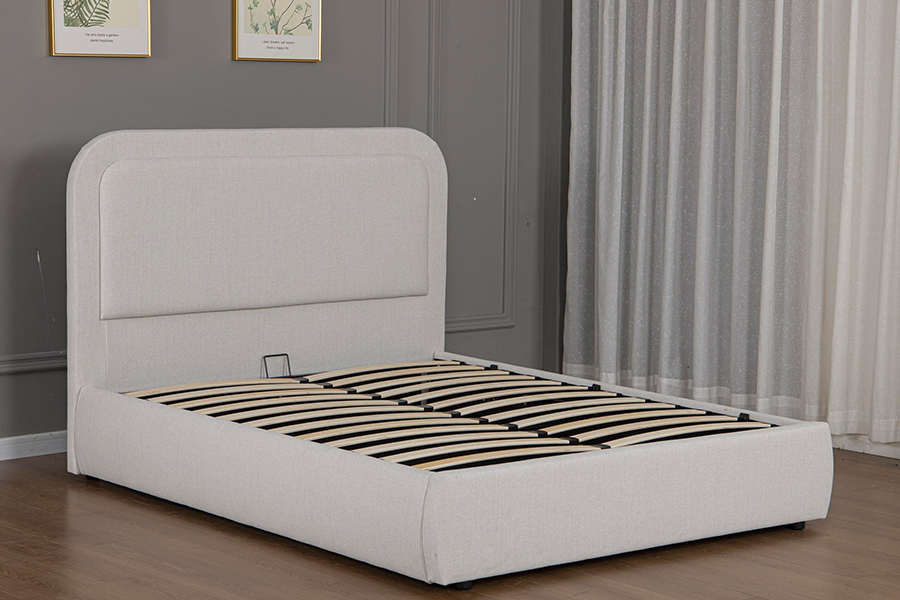
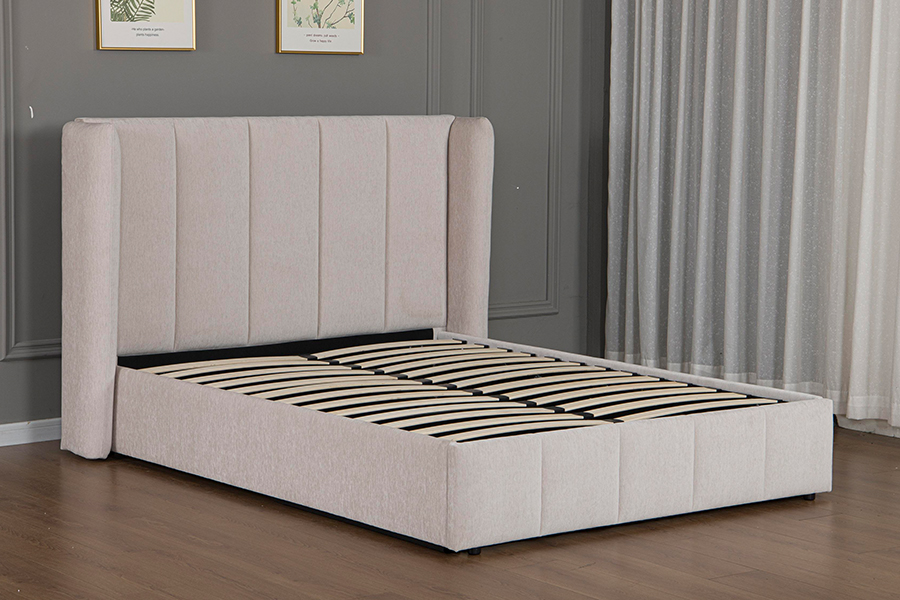
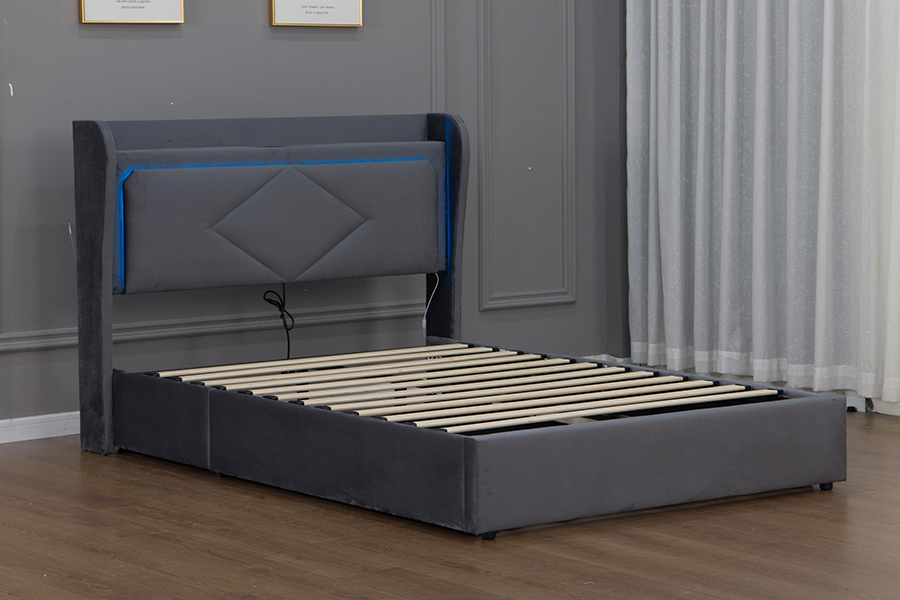
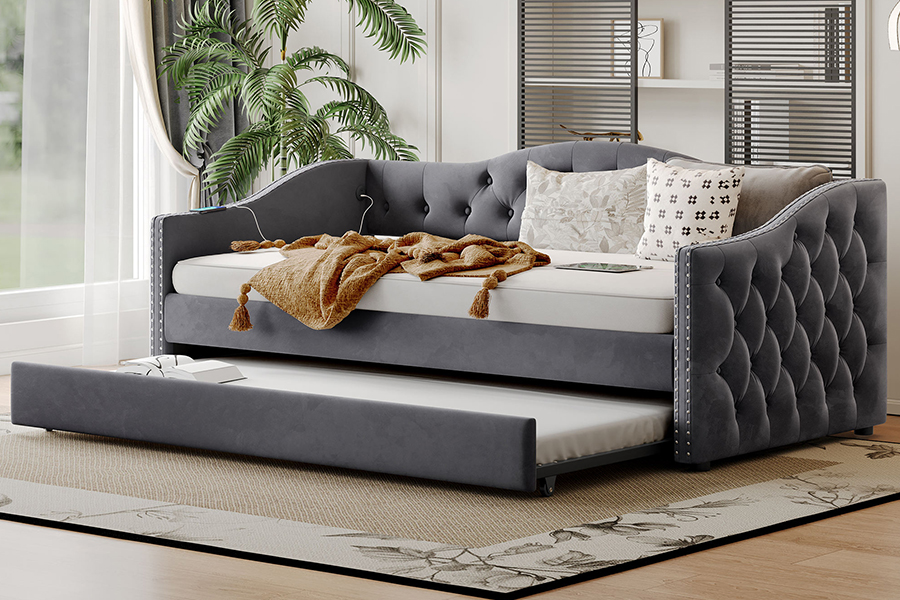
A divan headboard — typically an upholstered, freestanding panel mounted directly to the wall rather than bolted to the bed frame — is one of the most forgiving headboard styles when mattress and frame sizes do not match. Because it is wall-anchored and size-independent, it does not need to align precisely with the frame's width.
This is a meaningful advantage. Traditional bolt-on headboards are sized to match specific frame widths. A queen headboard bolted to a king frame looks obviously undersized, leaving visible frame rails exposed on both sides. A divan headboard mounted to the wall sidesteps this entirely: its width is chosen independently, and it can be positioned to visually anchor the bed regardless of what size frame or mattress sits in front of it.
For a queen mattress on a king frame setup, the ideal approach is to select a divan headboard that is at least 76 inches wide — matching the king frame — or even wider for a dramatic, luxury look. This way, the headboard visually completes the king-sized frame, and the viewer's eye is drawn to the full width of the bed rather than the narrower mattress.
Practical Solutions for the Gap Between Mattress and Frame
Managing the 8-inch gap on each side of the mattress requires more than just visual tricks. There are several approaches ranked by effectiveness:
- Fill the gap with a foam rail insert. Cut-to-size foam inserts placed alongside the mattress within the frame eliminate the rollover hazard and create a firmer, even surface edge-to-edge. Cover with a fitted sheet sized to the mattress for a seamless finish.
- Use a platform-style slat base. If the king frame uses a slatted or solid platform base, the queen mattress sits more stably than on a frame with exposed side rails. The slats provide full-width support even if the mattress doesn't cover the full frame width.
- Add a fitted bed skirt sized to the frame. A king-size bed skirt draped over the frame conceals the side gaps from view, giving the bed a unified, finished appearance from the outside.
- Use oversized bedding. King-size duvet covers and fitted sheets (where fitted to the frame base, not the mattress) can camouflage the size discrepancy. Layering king-size throw pillows against the divan headboard reinforces the wide, intentional look.
None of these fully replicate the structural integrity of a properly sized setup, but combined, they make the configuration livable and presentable for an extended transition period.
When to Commit to a Proper King Setup Instead
The queen-on-king arrangement works as a short-term or transitional solution. It becomes problematic when used as a long-term permanent setup — particularly if the mattress is new, expensive, or under warranty. Many mattress manufacturers specify that improper support (including oversized frames) can void coverage for sagging defects.
The table below summarizes how each scenario stacks up:
| Situation | Queen on King Frame | Matched King Setup |
|---|---|---|
| Mattress edge support | Partial | Full |
| Safety (rollover gap) | Risk present | None |
| Warranty validity | May be voided | Maintained |
| Divan headboard compatibility | High (wall-mounted) | High (wall-mounted) |
| Visual finish | Manageable with styling | Clean and proportional |
| Cost to implement | Low | Higher (new mattress) |
If the king frame is a keeper and the budget allows, upgrading to a king mattress is the cleanest resolution. Paired with a properly sized divan headboard mounted at the correct height above the mattress — typically leaving 20 to 28 inches of headboard visible above the top of the mattress for standard decorative and functional use — the result is a bedroom setup that looks intentional, sleeps safely, and requires no ongoing workarounds.