


 Deutsch
 Español
 Français
 русский
Content
- 1 Why Is Your Bed Frame Too Big for Your Mattress?
- 2 The Real Risks of an Oversized Bed Frame
- 3 7 Practical Solutions When Your Bed Frame Is Too Big
- 3.1 1. Use a Mattress Gap Filler or Mattress Bridge
- 3.2 2. Raise the Foundation or Box Spring
- 3.3 3. Adjust or Lower an Adjustable Headboard
- 3.4 4. Install Foam or Lumber Filler Strips Along the Side Rails
- 3.5 5. Reposition the Mattress Against the Footboard
- 3.6 6. Add Non-Slip Pads to Prevent Shifting
- 3.7 7. Replace the Frame or the Mattress
- 4 What Is a Tufted Wingback Headboard?
- 5 Upholstery Materials and Finish Options
- 6 How to Choose the Right Tufted Wingback Headboard Size
- 7 Pairing a Tufted Wingback Headboard with the Right Bed Frame
Why Is Your Bed Frame Too Big for Your Mattress?
A bed frame that is noticeably larger than the mattress sitting inside it is one of the most common — and most frustrating — bedroom setup problems. Before reaching for a fix, it helps to understand exactly why the mismatch happened in the first place.
The most frequent culprit is a size category confusion. Standard mattress dimensions are not universally identical across all manufacturers. A king-size mattress from one brand may measure 76" × 80", while a frame marketed as "king" may have been dimensioned to an older or regional standard with slightly more interior clearance. Similarly, a California King mattress (72" × 84") placed inside a standard King frame (76" × 80") will have a noticeable gap along both sides and a short overhang at the foot — a mismatch that catches many buyers off guard.
Other common causes include purchasing a frame and mattress from different retailers without cross-checking interior dimensions, receiving the wrong size at delivery, or upgrading to a thicker mattress without realizing the taller profile would change the visible gap between mattress top and headboard. A gap at the headboard end is particularly disruptive — pillows slide behind the mattress overnight, and sleeping close to the headboard becomes uncomfortable.
The Real Risks of an Oversized Bed Frame
A size mismatch might look like a cosmetic issue, but the consequences extend well beyond aesthetics. When a mattress does not fully fill the bed frame's interior, the unsupported edges are under constant uneven stress. Over time, this accelerates edge breakdown, causing the mattress to lose its structural integrity along the sides and corners faster than the center. For memory foam and hybrid mattresses in particular, edge support is a critical performance feature — and a chronic size mismatch undermines it from the start.
Safety is a second concern, especially in households with young children or elderly occupants. A mattress that sits loosely inside an oversized frame can shift during sleep, creating gaps along the sides that pose an entrapment hazard. A gap at the headboard means pillows — or a sleeping person's head — can slip into the space between mattress and frame during the night.
Finally, an improper fit can void a mattress warranty. Most manufacturers specify that the mattress must be supported within a correctly sized frame; significant overhang or under-support can be cited as misuse if warranty claims arise. Industry guidance generally holds that mattress overhang of more than 1–2 inches on any side moves from acceptable tolerance into problematic territory.
7 Practical Solutions When Your Bed Frame Is Too Big
The severity of the mismatch determines which solution is most appropriate. Here are the most effective fixes, from immediate DIY remedies to permanent structural upgrades.
1. Use a Mattress Gap Filler or Mattress Bridge
A mattress gap filler — also called a mattress bridge or foam wedge — is a purpose-built accessory designed to fill the space between the mattress and headboard or side rails. Available in multiple widths and densities, gap fillers are cut from high-density upholstery foam and can be wrapped in fabric to match the existing bed aesthetic. They are affordable, widely available, and removable if the setup changes.
2. Raise the Foundation or Box Spring
If the gap is primarily at the headboard due to height mismatch rather than width or length, investing in a higher-profile foundation brings the mattress surface level closer to the headboard. Measure the vertical distance between the top of your current mattress and the headboard's lower edge, then select a box spring or platform foundation with enough height to close that gap. This is particularly effective when a low-profile mattress is paired with an adjustable or tall-frame headboard.
3. Adjust or Lower an Adjustable Headboard
Many modern bed frames allow the headboard mounting height to be repositioned by loosening bolts and resetting them at a lower point on the headboard legs. If pillows are regularly slipping behind the mattress, this is often the quickest resolution — lower the headboard until the gap closes to less than an inch.
4. Install Foam or Lumber Filler Strips Along the Side Rails
For lateral gaps — where the mattress is narrower than the frame's interior width — dense foam strips or 1×2 lumber boards can be fastened to the inside edge of the frame rails. Cut the material to length, wrap foam strips in coordinating fabric, and secure with adhesive Velcro or small screws for a clean, nearly invisible fix. This approach also prevents the mattress from shifting side-to-side during sleep.
5. Reposition the Mattress Against the Footboard
If the length mismatch is primarily at the headboard end — a common issue with king frames paired with standard king mattresses — sliding the mattress toward the footboard consolidates the gap into the headboard zone where it is less disruptive. Pair this with a long body pillow or decorative bolster placed behind the mattress to fill the remaining headboard gap and prevent pillow loss during the night.
6. Add Non-Slip Pads to Prevent Shifting
When the frame is only marginally oversized and the primary problem is mattress drift, non-slip rubber pads placed between the mattress base and the frame's slat surface provide effective friction. These are low-cost, require no tools, and can be layered for additional grip. They do not fix the visual gap but significantly reduce movement throughout the night.
7. Replace the Frame or the Mattress
When the mismatch is significant — more than 3–4 inches in any direction — the only fully effective long-term solution is matching the components correctly. Replacing the bed frame to match the mattress size is usually simpler than replacing a newer mattress. When shopping for a replacement, always measure the interior dimensions of the frame (not the exterior footprint) and cross-reference with the exact dimensions of the mattress, including any mattress-in-a-box expansion tolerances.

What Is a Tufted Wingback Headboard?
Once the size mismatch is resolved — or when choosing a new frame from scratch — the headboard becomes the single most impactful design decision in the bedroom. Among upholstered headboard styles, the tufted wingback headboard stands as one of the most enduringly popular choices for both residential and boutique hospitality settings.
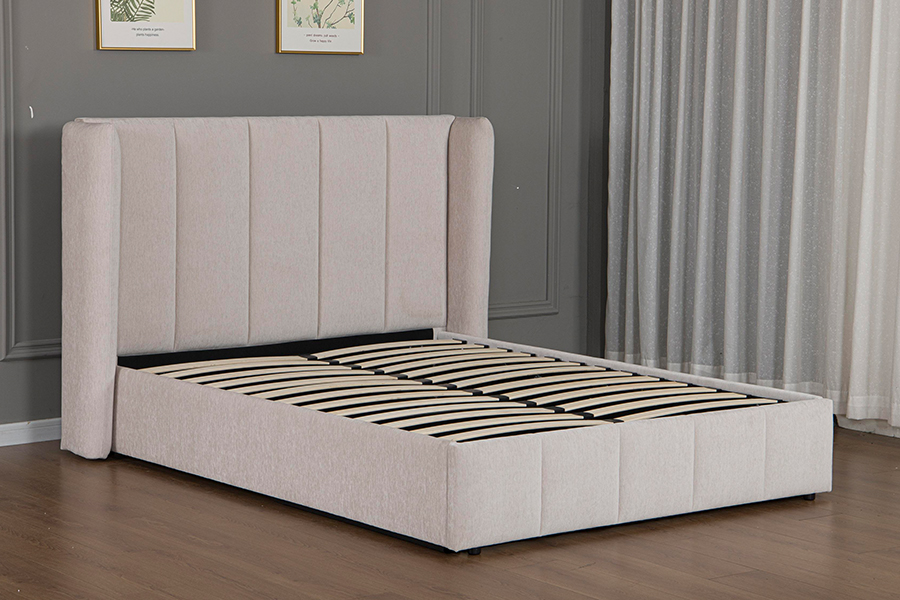
A wingback headboard is defined by its characteristic side panels — called "wings" — that extend forward from the main headboard face, wrapping slightly around the sides of the bed. The silhouette is borrowed directly from the classic wingback armchair, a furniture form developed in 17th-century England where the wings were originally designed to shield the sitter from fireplace drafts. On a headboard, the wings serve a similar sheltering function: they create a visual enclosure that makes the sleeping area feel more intimate and defined within a larger room.
Tufting refers to the decorative technique of pulling fabric tight with buttons or stitching at regular intervals to create a pattern of sunken indentations across the padded surface. The most classic tufting pattern is diamond tufting (also called button tufting or Capitone), in which evenly spaced buttons create a grid of raised diamond shapes across the headboard face. Channel tufting — parallel vertical or horizontal ridges — is a more contemporary variation that reads as cleaner and more linear in modern or mid-century interiors.
Together, a tufted wingback headboard combines the sculptural depth of the wing silhouette with the textural richness of tufted upholstery, producing a piece that functions as both a practical backrest and an architectural focal point for the room.
Upholstery Materials and Finish Options
The material choice for a tufted wingback headboard significantly shapes the mood of the bedroom. Each fabric brings distinct qualities in texture, durability, and visual weight.
| Material | Aesthetic | Best For | Maintenance |
|---|---|---|---|
| Velvet | Rich, luxurious, deep color saturation | Glam, Art Deco, maximalist interiors | Moderate — requires lint roller; avoid moisture |
| Linen / Linen Blend | Soft, breathable, textured matte finish | Transitional, Scandinavian, farmhouse | Easy — spot clean; wrinkles add character |
| Faux Leather | Sleek, structured, modern-classic | Contemporary, industrial, minimalist | Easy — wipe clean with damp cloth |
| Boucle | Tactile, cozy, soft sculptural presence | Modern organic, coastal, warm-neutral palettes | Moderate — professional clean recommended |
| Genuine Leather | Premium, durable, develops patina | Traditional, club-style, long-term investment pieces | Low — conditions with leather care products |
Beyond fabric, most tufted wingback headboards are finished with nailhead trim — a row of individually applied decorative metal studs that outlines the headboard's silhouette and wing edges. Nailhead trim adds a tailored, hand-crafted quality to the piece and is available in antique brass, brushed nickel, bronze, and gunmetal finishes to coordinate with other hardware in the room.

How to Choose the Right Tufted Wingback Headboard Size
Sizing a tufted wingback headboard correctly requires attention to both the bed's dimensions and the room's proportions. The standard guidance is that a headboard should be at minimum the same width as the mattress; most wingback designs extend 2–6 inches wider due to the wing panels, which is visually desirable as it frames the bed width without overwhelming it.
Height is the more nuanced dimension. A headboard that is too short for the wall space above the bed creates a disconnected, floating appearance. As a practical rule, the top of the headboard should reach approximately two-thirds of the wall height between the top of the mattress and the ceiling, or align with the top of windows or artwork flanking the bed. For standard 9-foot ceilings with a bed height of 24–26 inches off the floor, a headboard height of 50–60 inches typically strikes the right visual balance. Taller ceilings — 10 feet and above — can accommodate statement wingback headboards reaching 70–88 inches.
For rooms where the bed frame already has a known size mismatch issue, choosing a wingback headboard with adjustable mounting legs provides additional flexibility: the headboard height can be raised or lowered at the frame attachment point to close headboard-to-mattress gaps without requiring any structural change to the frame itself.
Pairing a Tufted Wingback Headboard with the Right Bed Frame
A tufted wingback headboard is most often sold as a standalone piece that attaches to any standard bed frame via bolt-on mounting brackets, making it compatible with platform frames, metal frames, and traditional rail-and-slat setups regardless of brand. This flexibility means resolving a bed frame size mismatch and upgrading the headboard can be done independently — you do not need to purchase an entire new bed set.
When pairing a wingback headboard with a corrected or new bed frame, keep the following styling principles in mind. The padded wings of the headboard add visual mass on both sides of the bed, so the nightstands flanking it should be scaled to complement — not compete. Lower-profile nightstands (24–28 inches tall) keep the headboard as the clear focal point. Bedding choices also interact with the headboard's texture: smooth, solid-color duvet covers in neutral tones allow the tufted detail to read clearly, while heavily patterned bedding can visually compete with the diamond grid of the tufting.
Finally, because a tufted wingback headboard is a statement piece with significant visual depth, wall treatments behind it should remain relatively subdued. A single neutral wall color, a subtle textured wallpaper, or a soft accent color that picks up a tone from the upholstery fabric are all approaches that let the headboard anchor the room without creating visual competition between the wall and the furniture.