


 Deutsch
 Español
 Français
 русский
A mattress that sits loosely inside a bed frame is one of the most common — and most frustrating — bedroom problems. Pillows slip into the gap. Sheets bunch up. The bed shifts during sleep. And if you've recently upgraded to a foam bed frame and headboard, a size mismatch can make the whole setup feel unstable. The good news: most cases are fixable without replacing either piece. This guide explains why the gap exists, how foam frames interact with mattress sizing, and exactly what to do about it.
Content
Why Your Mattress Feels Too Small for the Bed Frame
The mismatch is almost never a manufacturing error. It's a product of how the industry defines sizes. A "queen" mattress from one brand may measure 60 × 80 inches, while another manufacturer's queen sits at 59.5 × 79.5 inches. Bed frames, meanwhile, are built to accommodate the upper end of those tolerances. The result: a gap of 0.5 to 1.5 inches on each side is entirely normal. Anything beyond 2 inches per side, however, indicates a real mismatch that needs addressing.
Memory foam and all-foam mattresses add a secondary cause. A new foam mattress shipped in a compressed roll can take 24 to 72 hours to fully expand. If you place a freshly unboxed foam mattress inside a frame and measure immediately, it will appear undersized. In most cases, the mattress reaches its full dimensions within three days — so before troubleshooting, give it time.
Regional size differences create a third source of confusion. UK king mattresses (60 × 78 inches) are narrower and shorter than US king mattresses (76 × 80 inches). Importing or inheriting furniture across markets is a common reason shoppers end up with components that look the same on paper but measure differently in practice.

How a Foam Bed Frame and Headboard Make the Problem Worse — or Better
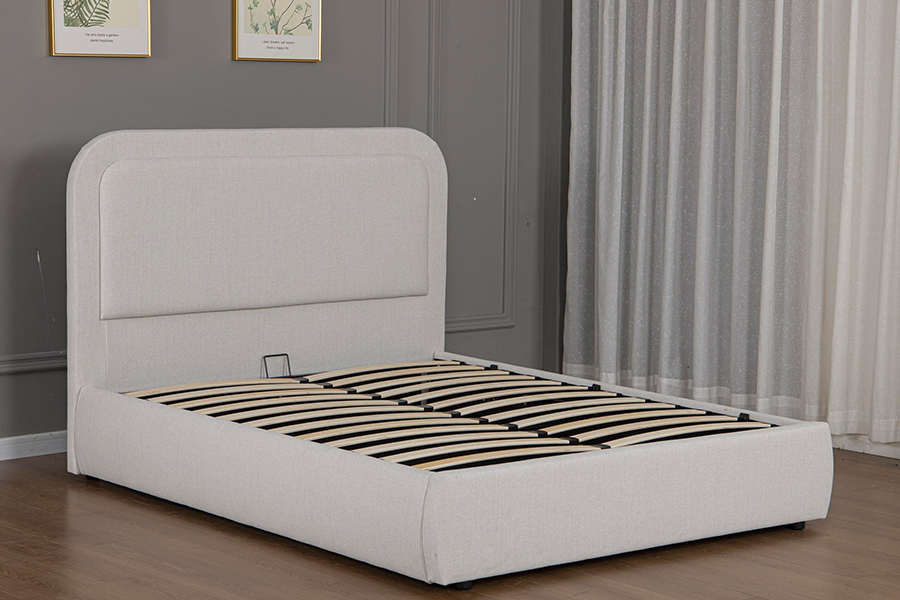
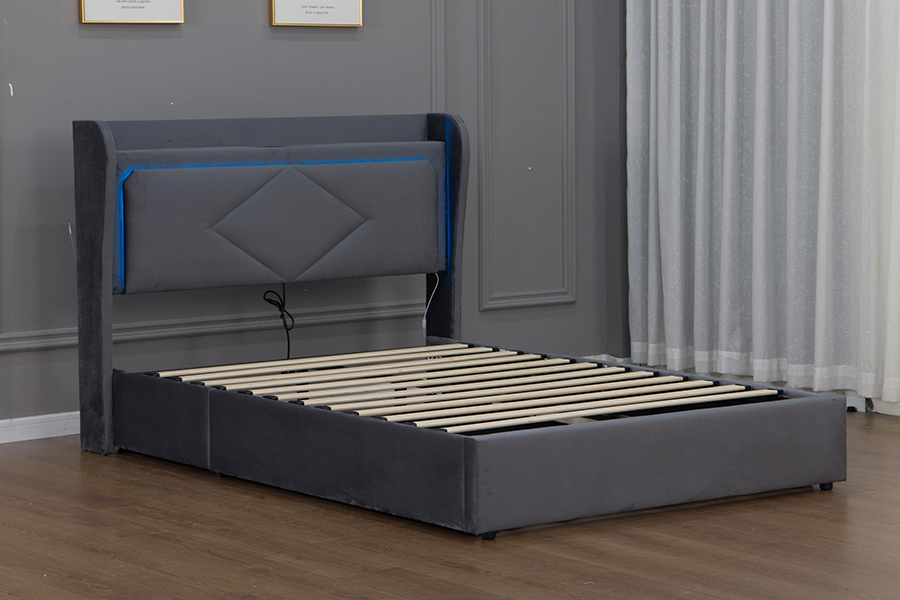
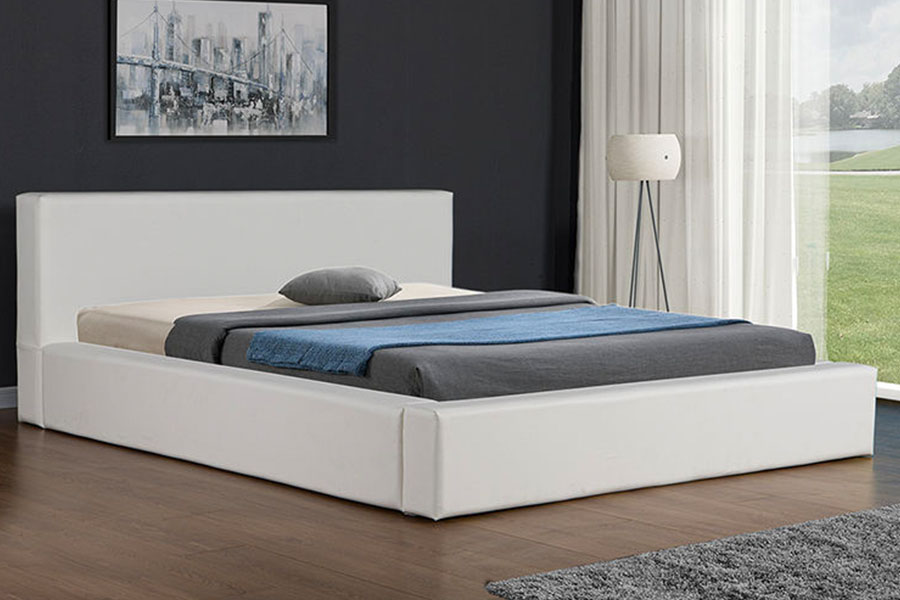
A foam bed frame — meaning an upholstered frame padded with high-density foam and wrapped in fabric or leather — changes the geometry of a standard bed setup in ways that affect mattress fit directly.
On the positive side, foam-padded interior rails compress slightly under pressure, which means a mattress that would rattle around in a hard metal frame may sit more snugly inside a soft upholstered one. The fabric surface also adds friction, reducing the mattress's tendency to drift sideways during sleep. For gaps in the 0.5–1 inch range per side, a well-constructed foam frame often self-corrects the problem simply by its material properties.
On the negative side, thick foam padding on the inner walls of the frame effectively reduces the usable interior width. A frame listed as "queen size" but padded with 1.5-inch foam rails on each side has an internal usable space closer to a full-size (57 inches) than a true queen (60 inches). If you select a standard queen mattress for that frame, it may fit too tightly — creating edge compression that shortens mattress lifespan.
The headboard plays a related role. A foam headboard that is not securely attached — either to the frame or directly to the wall — will shift forward when the mattress moves, gradually widening the gap at the top of the bed. This is one of the most common complaints among owners of upholstered bed sets. To learn how to stop your headboard from hitting the wall and stabilize the overall setup, addressing the mattress fit and the headboard connection together produces the best result.
Quick Fixes: Closing the Gap Without Buying New
If the gap is between 0.5 and 2 inches per side, several practical solutions work without replacing any major component.
Foam rail inserts are the most effective short-term fix. Cut-to-size foam strips placed between the mattress edge and the inner frame rail eliminate the gap entirely, stabilize the mattress, and prevent edge compression from soft inner walls. High-resilience foam in the 30–40 ILD firmness range works best — firm enough to hold position, soft enough to compress safely if a sleeper rolls to the edge.
Non-slip mattress pads address lateral drift rather than the gap itself. Placed between the mattress and the slat base, a rubberized non-slip pad prevents the mattress from migrating toward any side of the frame. This is especially useful in frames where the slats are widely spaced or where the base surface is smooth.
Mattress retainer bars — metal brackets that clip to the head of the frame and press against the bottom of the mattress — prevent forward drift and reduce the headboard gap. They are inexpensive, install in under five minutes, and are compatible with most platform and slat-base frames.
For a temporary fix, deep-pocket fitted sheets with anchor straps at all four corners will hold the mattress centered within the frame and disguise minor perimeter gaps. This is not a structural solution, but it improves both the appearance and the feel of the bed while you plan a longer-term fix.

Choosing the Right Foam Bed Frame and Headboard for Your Mattress Size
The most reliable way to avoid a size mismatch is to measure the interior of any frame before purchasing a mattress — or measure the mattress before selecting a frame. Always use the inner rail-to-rail dimension, not the outer frame dimension or the size label alone. A standard queen frame should measure 60 to 60.5 inches between inner rails; a king should measure 76 to 76.5 inches. Any frame that deviates more than 1 inch from these figures in either direction warrants a different selection.
| Size | Mattress Width × Length | Ideal Frame Interior | Max Acceptable Gap (per side) |
|---|---|---|---|
| Twin | 38 × 75 in | 38–38.75 in | 0.5 in |
| Full | 54 × 75 in | 54–55 in | 0.5 in |
| Queen | 60 × 80 in | 60–61 in | 0.5 in |
| King | 76 × 80 in | 76–77 in | 0.5 in |
| Cal King | 72 × 84 in | 72–73 in | 0.5 in |
When evaluating foam bed frames specifically, ask the manufacturer for the usable interior dimension — the measurement after foam padding is installed — rather than the nominal frame size. Frames with thicker upholstered rails (over 1.5 inches) reduce the internal cavity meaningfully. If you already own a mattress, bring its exact measurements to the conversation rather than relying on size category names.
Headboard compatibility is a separate consideration. Wall-mounted or freestanding foam headboards avoid the sizing constraint entirely, since they do not bolt to the frame and their width can be selected independently. This is particularly useful for non-standard setups such as a queen mattress on a king frame, where a bolt-on headboard would visually expose the size mismatch while a wider wall-mounted panel conceals it. If you prefer a frame-mounted headboard, confirm that its attachment points align with your specific frame's bolt pattern — most frames use a standard two-bolt system, but spacing varies by manufacturer.
For bedrooms that also need storage, upholstered storage bed frames combine the soft-surface benefits of foam padding with integrated under-bed storage. These frames typically have tighter interior tolerances because the lift mechanism requires a close fit between the mattress deck and the frame perimeter — making accurate sizing even more important before purchase.
When to Replace vs. When to Adapt
Most size mismatches fall into the "adapt" category: the gap is small, the mattress is otherwise a good fit for the space, and a combination of foam inserts and non-slip pads resolves the problem at low cost. Adapt when the gap is under 1.5 inches per side, the mattress is less than five years old, and the frame structure is otherwise sound.
Replace when the gap exceeds 2 inches on any side. At that width, the mattress loses meaningful edge support, and the structural risk — compression of unsupported foam layers, accelerated sagging, potential rollover hazard — outweighs the cost of a new frame or mattress. Before purchasing a replacement, measure the interior of the existing frame or the actual dimensions of the existing mattress, not the size label. Manufacturer tolerances can vary by up to 2 inches from stated sizes, and buying by name alone can recreate the same mismatch.
Also replace when the mattress warranty is at risk. Many foam mattress manufacturers specify that improper lateral support — including oversized frames — voids coverage for sagging defects. If the mattress is new and expensive, fitting it correctly from the start protects the investment.
Finally, consider replacing when the mismatch is the symptom of a larger problem: a worn frame with broken slats, a foundation that no longer sits level, or frame rails that have warped over time. In those cases, a new upholstered foam frame that is correctly sized for the mattress solves the gap problem while restoring structural support across the full sleep surface.