


 Deutsch
 Español
 Français
 русский
Content
- 1 Why Bedroom Furniture Is More Vulnerable Than It Looks
- 2 How Water Affects Different Bedroom Furniture Materials
- 3 The First 24–48 Hours: What Actually Determines the Outcome
- 4 Repair or Replace? A Practical Decision Guide by Furniture Type
- 5 Buying Water-Resistant Bedroom Furniture From the Start
- 6 Special Considerations for Kids' Rooms and Spill-Prone Areas
- 7 A Quick Prevention Checklist
Why Bedroom Furniture Is More Vulnerable Than It Looks
A knocked-over glass of water on a nightstand, a humidifier that leaks overnight, a window left open during a storm — none of these feel like emergencies at the time. But bedroom furniture sits closer to daily moisture sources than almost anything else in the house, and it's often built from materials that absorb water quietly, long before any visible sign appears.
By the time a stain shows up on a wood surface or a mattress starts to smell slightly off, the damage has usually been developing for hours, not minutes. Knowing what water actually does to each type of bedroom furniture — and how fast you need to move — makes the difference between a five-minute fix and a piece you end up replacing.
How Water Affects Different Bedroom Furniture Materials
Not all bedroom furniture responds to moisture the same way, so the right response depends heavily on what the piece is made of.
Solid wood bed frames are porous but forgiving. Water sitting on the surface will raise the grain and can leave a pale ring, but as long as it hasn't soaked into a joint or seam, a solid wood frame usually dries out without structural harm. The bigger risk is at the joints, where trapped moisture can loosen glue over time. Solid wood bed frames built for long-term structural stability tend to hold their joints better through the occasional spill than frames built from engineered board.
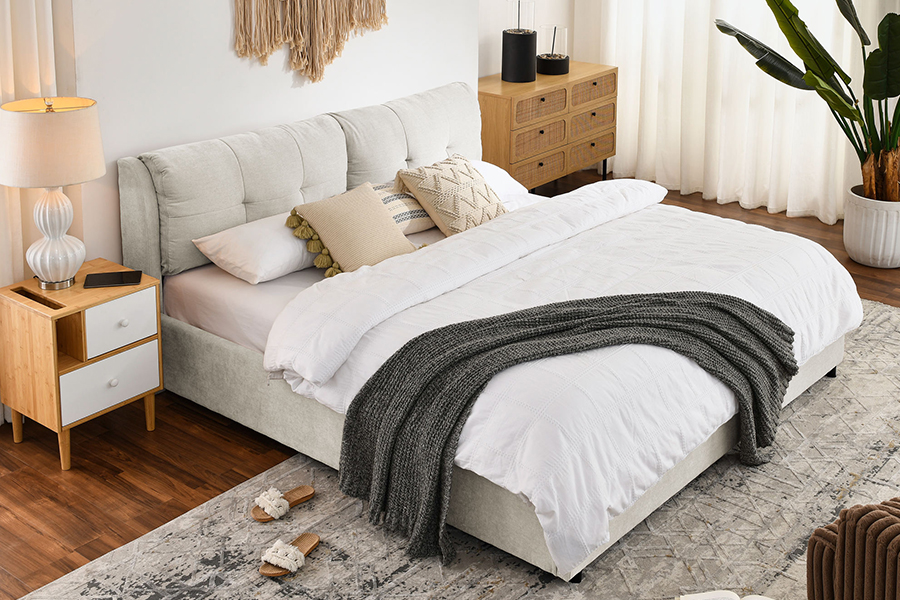
Upholstered beds face a different problem. Fabric wicks moisture sideways, so a small spill can spread into a much larger damp patch than it looks like at first glance. Left untreated, that dampness sits against the foam padding underneath and turns musty within a day or two.
Mattresses are arguably the most sensitive piece in the room. The materials inside — memory foam, latex, or fiber padding — hold moisture deep in the core, where air can't reach it. A mattress that feels dry on the surface can still be damp several inches in, which is exactly the condition mold needs.
Engineered wood pieces, including many dressing tables and nightstands built from MDF or particleboard, are the least forgiving of all. Unlike solid wood, engineered board doesn't just absorb water — it swells permanently. Once the fibers expand, they don't shrink back down when the piece dries, which is why a swollen drawer front or a bubbled laminate edge rarely returns to its original shape.
The First 24–48 Hours: What Actually Determines the Outcome
Almost every restoration professional agrees on one point: speed matters more than technique. According to the EPA's guidance on mold and moisture control, wet materials need to be dried within 24 to 48 hours to prevent mold from establishing itself — after that window, the odds of a clean recovery drop sharply.
In practice, that means acting immediately rather than waiting to see how bad it looks:
- Blot, don't rub — pressing a dry towel straight down pulls water out without pushing it deeper into fabric or wood grain
- Remove cushions, mattress toppers, or drawers so air can reach both sides of the affected surface
- Run a fan or dehumidifier in the room rather than relying on an open window alone, especially in humid climates
- Avoid direct sunlight or a hairdryer on wood — fast, uneven drying is what causes cracking and warping, not the water itself
If a mattress has absorbed more than a light surface splash, treat it with more suspicion than furniture. Because the moisture sits deep in the padding, a mattress that seems fine after a quick air-dry can still develop odor or mold days later.

Repair or Replace? A Practical Decision Guide by Furniture Type
Once everything is as dry as it's going to get, the next decision is whether the piece is worth saving.
| Furniture type | Usually salvageable | Replace instead |
|---|---|---|
| Solid wood bed frame | Surface water, no swelling at joints | Loose or delaminated joints, visible mold in cracks |
| Upholstered bed | Small, quickly-treated spill on the surface fabric | Fabric soaked through to the foam, musty odor persists after drying |
| Mattress | Very light surface moisture, dried within hours | Soaking, standing water, or any lingering odor |
| Engineered wood dresser or nightstand | Light moisture on a sealed top surface, wiped up immediately | Visible swelling, bubbled laminate, or soft spots in the board |
Engineered wood is the category worth being most cautious about. Because the swelling is permanent, sanding and refinishing rarely restores the original shape the way it can with solid wood — the fibers themselves have physically expanded, not just the finish on top.
Buying Water-Resistant Bedroom Furniture From the Start
For bedrooms with an ensuite bathroom, a humidifier, or simply a household with young kids and full water glasses on nightstands, prevention is a more realistic strategy than repair. A few material choices make a measurable difference over the life of the furniture.
Solid wood remains the most forgiving frame material for humid climates — solid wood bed frames built for long-term structural stability hold up to occasional moisture exposure far better than particleboard alternatives. For upholstered pieces, look specifically for fabric treatment rather than just fabric type; upholstered bed frames with stain-resistant fabric treatments shed light spills instead of absorbing them immediately, buying valuable extra minutes before the moisture reaches the padding.
Mattress choice matters just as much as frame choice. Mattresses designed with breathable, moisture-managing covers allow surface dampness to evaporate rather than sinking straight into the foam core, which is where mold actually starts.
Surfaces near drinks, cosmetics, or skincare routines deserve the same attention. Dressing tables with sealed, wipe-clean surfaces resist the kind of daily splash damage that slowly dulls an unsealed finish, and nightstands finished with water-ring-resistant top coatings handle the nightly glass of water without leaving a permanent mark.
Special Considerations for Kids' Rooms and Spill-Prone Areas
Kids' rooms see a different volume and frequency of spills than adult bedrooms — spilled drinks, wet swimsuits, humidifiers running through cold and flu season. The materials that hold up fine in an adult bedroom often show wear much faster here.
Kids beds designed with durable, easy-clean finishes are worth prioritizing over frames with delicate paint or unsealed wood, simply because they're built to handle repeated wiping without the finish breaking down. It's a smaller upfront consideration that saves a lot of refinishing work later.
A Quick Prevention Checklist
- Wipe up spills immediately rather than letting them air-dry on their own
- Keep humidifiers and diffusers off of wood or upholstered surfaces, on a tray if possible
- Dry any wet furniture within 24–48 hours to stay ahead of mold risk
- Choose sealed, treated, or moisture-managing materials for pieces near bathrooms, kids' rooms, or humid climates
- Check joints and drawer edges periodically for early signs of swelling, which is far easier to address than full replacement
Most bedroom furniture doesn't fail because of one dramatic flood — it fails from small, repeated moisture exposure that nobody treated as urgent at the time. Acting quickly on the small spills is what keeps the big repairs from ever becoming necessary.